
GARDEN BLOG - SEPTEMBER
September 1st is the feast day of Saint Fiacre, patron saint of gardeners.
A seventh century catholic priest, abbot, hermit, and gardener, Fiacre was born and raised in Ireland, before travelling to France, where he constructed a hermitage, garden, and oratory, along with a hospice for travellers, on land given to him by Saint Faro. Fiacre set about toppling trees, uprooting briers, cleared weeds, and turned the earth, armed with nothing more than the end of his staff. A local woman, unable to believe that this extraordinary feat was the work of God, accused Fiacre of witchcraft. Having been exonerated of such malpractice by St. Faro, Fiacre banned all women from his precincts in an act of collective punishment, from where he then devoted his life to prayer, fasting, keeping vigils, curing folk of their medical ailments, and the cultivation of his garden. Fiacre had a particular reputation for healing haemorrhoids, which became known in the Middle Ages as St. Fiacre’s figs. As a result, Fiacre is also the patron saint of that most uncomfortable malady.
Ahead of his feast day, St. Fiacre has given us a delightful gift, for as I write this, in the dying days of August, we are being blessed with the first significant rain in well over two months. Hopefully, the dreadful drought is now broken.
Although the drought has caused our lawns and borders a great deal of suffering, tender perennials, grown in pots and urns around the gardens, have thrived. Our angels trumpets, cannas, love-lies-bleeding, salvias, heliotropes, fuchsias, marguerites, and coleus etc, have all had a ball this summer, along with our pot grown dahlias.
Dahlias originate from mountainous regions of Central America, most notably modern-day Mexico. The indigenous people of that region, and their ancient civilisations, such as Aztecs and Toltecs, used extracts of the flowers to treat common ailments, while its tubers were consumed in much the same way as potatoes. To them, dahlias were also symbolic of power and strength, due to their thriving in rugged terrain at high altitude. In 1963, the Mexican government formally recognised the Dahlia as the nation’s national flower. As a symbol of national pride, dahlias are now celebrated in festivals, used to adorn altars, and decorate wedding arches.
Dahlias were first introduced into cultivation in Europe in 1786, when a Spanish botanical expedition to Mexico sent them to the Royal Botanic Gardens, Madrid. Before long, seeds and tubers from these dahlias were widely distributed to botanists across Europe. These original species had simple, single flowers, with an open centre. However, it soon became apparent that when grown from seed, they would hybridise readily, producing radical changes in colour and form, leading to a breeding frenzy. At the height of their popularity, during the 1930s, several thousand named Dahlia varieties were in cultivation, but as is ever the case, the tide of floral fashion turned, and only a small fraction were available half a century later. Recent years have certainly seen something of a revival in the popularity of dahlias, with renewed interest in their cultivation.
Our dahlias will continue to do a sterling job of beautifying the gardens until cut down by the first frosts of autumn. At that point, they will be moved to our frost-free polytunnel, and dried out over winter, before being revived from their slumber next spring.
September marks a turning point in the gardens, as days shorten and get cooler, there’s a whiff of autumn in the air. The tender perennials in our pots and urns, much like the dahlias, will soon be consigned to our compost heap as they are slain by frigid autumnal air.
Before they meet their maker, new plants are produced by cuttings taken at this time of year.
Most tender perennial cuttings are nodal, meaning that the cut is made just below a leaf joint, otherwise known as a node, where there is a concentration of hormones to stimulate root production.
For best results, collect non-flowering shoots, as they will root more readily.
Using a sharp knife or secateurs, trim below a leaf joint to make a cutting that is roughly 5-10cm in length, remove lower leaves, and dip the cutting base in hormone rooting powder or liquid.
Fill a small pot with seed and cutting compost and insert several cuttings around the edge of the pot.
Label the pot, and water it gently from above.
Place the pot in a closed propagator with bottom heat of 18-24c, or cover with a transparent plastic bag, and place somewhere warm and light.
Remove the propagator lid or plastic bag for a short while a couple of times each week for proper ventilation, and to reduce the risk of fungal disease.
Ensure the compost remains moist until the cutting are rooted, which will take between two and four weeks.
Regularly remove any dead, dying, rotting, or diseased material.
Once successfully rooted, the new plants can be separated and potted up into a good multipurpose compost.
Another important task this month, and a jolly enjoyable one to boot, is harvesting fruit. We’ve already picked soft fruit such as blackberries and raspberries; figs produced a bumper crop; and we’ll gather top fruit such as plums, apples, and pears, before the month is out. Our quinces, however, are still as hard as bullets right now, so will be harvested in October or November, when they've turned from a light yellow to a golden colour and are extremely aromatic and somewhat softer.
On that mouthwatering note, until next month, happy gardening.

St v2. Fiacre
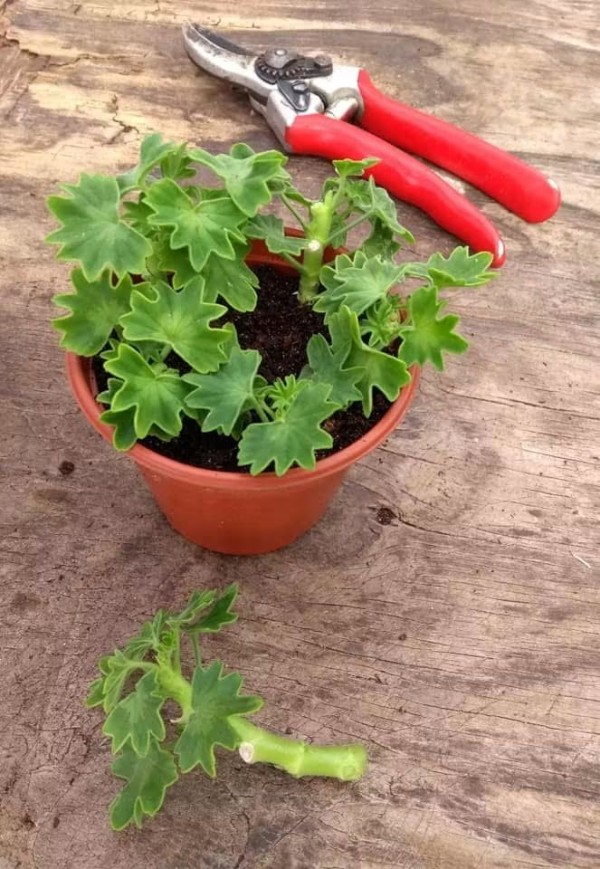
Pelargonium cuttings
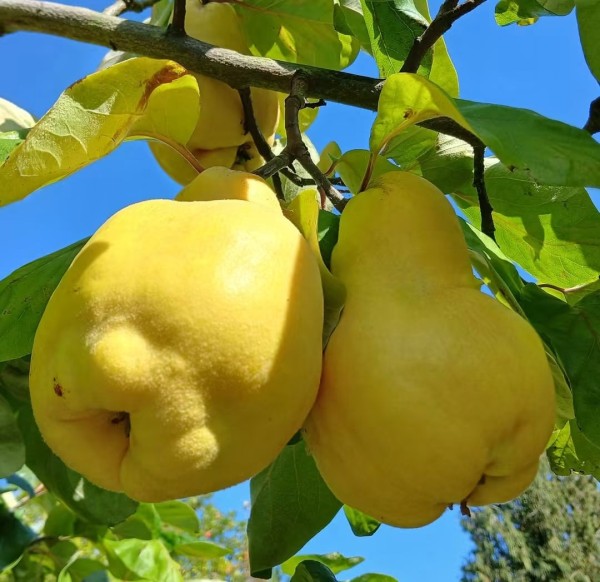
Quince fruits
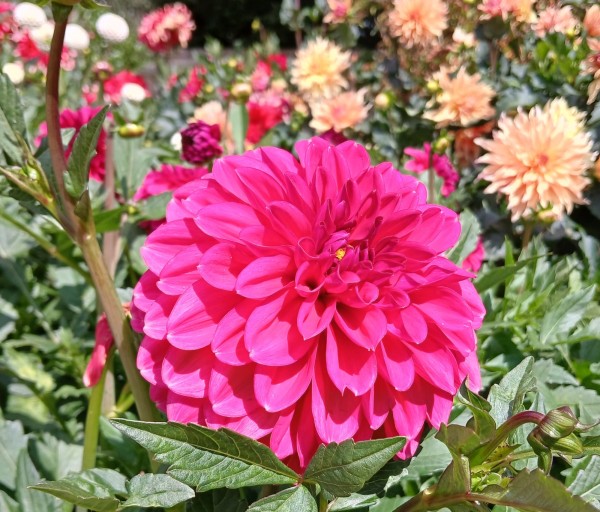
Dahlia Perch Hill
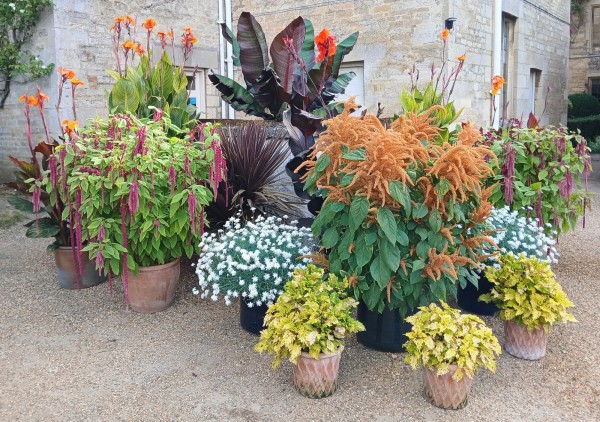
Perennials outside the tea room