
GARDEN BLOG - OCTOBER 2026
There’s one thing you can say for sure about American poet and author, Sylvia Plath; she’d never let anything get in the way of a spot of existential despair. So it was, on her thirtieth birthday, shortly after splitting up with the equally chipper Ted Hughes, when she wrote a poem titled ‘Poppies in October’, where the unexpected sight of unseasonal vibrant colour, in an otherwise bleak and decaying environment, led Sylvia to a state of melancholic meditation.
Us lowly gardeners are not really deep thinkers like Sylvia, so were not tempted into penning a little poetry for the handkerchief tree that is currently flowering it’s heart out here at Deene Park, we simply admired it with surprised curiosity. The poor handkerchief tree, you see, doesn’t seem to know whether it’s coming or going. Known to botanically minded types as Davidia involucrate, this tree that is native to China, flowered beautifully as usual in May. Then, as a result of the dreadful drought this summer, it shed quite a few leaves due to stress. After recent rain, it has decided to flower again, in the mistaken belief that we are now in spring. The poor soul. We’re expecting that it will now fail to flower next spring, or do so very poorly, having shot its bolt already. It’ll certainly be interesting to see what happens to our handkerchief tree in May.
Flowering perfectly normally in the gardens right now, are a selection of asters. Even though they were looking rather sorry for themselves during the drought, they’ve perked up very nicely after a spot of refreshing rain, and are seeing the season out with flowers in a lovely pallet of shades from pure white, through pinks, blues, and purples. Varieties of Aster novi-belgii and Aster novae-angliae are particularly attractive, as they have a good resistance to the powdery mildews that so often blight other species.
Another very attractive addition to the gardens right now are European spindle bushes. Otherwise known as Euonymus europaeus, and native to much of Europe, with the exception of Iberia, Scandinavia, and Scotland, they are to be found growing in woodland edges and farmers hedges. Their wood is exceptionally hard, and can be cut to a sharp point, leading to it being traditionally used in times gone by for making wool-spinning spindles, hence its common name. Despite its wild origins, it makes for a very decorative large garden shrub, having deep red autumn colour, and pink seed pods that open to reveal bright pink dangling fruits. Although very attractive, the fruits are also quite poisonous, with liver and kidney damage the likely upshot of ingestion.
Of course, October is the perfect time to get out and about, taking in the multitude of wonderfully fiery autumnal hues that are on offer as the season gets into full swing.
Besides spending our time marvelling at the beauty of nature, us gardeners are busy planting our pots and urns with their winter finery. Of course, their summer garb must be dealt with first.
When stripping the pots and urns, tender annuals such as Amaranthus, that we propagate from seed each year, are instantly dispatched to the compost heap.
Meanwhile, tender perennials that we grow each year from cuttings, such as fuchsias and heliotropes, that don’t have suitable cutting material at this time of year, are pruned hard back, potted up, and kept in the heated glasshouse until they return to growth, at which point they are harvested for cuttings and added to the compost heap, too.
Large tender shrubs, such as Brugmansia, are also pruned hard back, and placed into our heated glasshouse.
Cannas are lifted, divided, and potted up, before being housed in our frost free polytunnel, along with our dahlias, which are cut down to just a few inches high, and kept on the drier side throughout winter.
Another task for October is bulb planting. Now is the ideal time for not only planting spring flowering bulbs in the garden, but also those for forcing to decorate our homes in the depths of winter. Narcissi and hyacinths are favourites here, not only for their cheery colour in the darkest days, but also their intoxicating scent. The process of forcing is quite simple. Firstly, with regards to hyacinths, it’s essential to buy what are known as ‘prepared bulbs’, also, you may wish to wear gloves when handling them, as prepared hyacinths can cause skin irritation. For both narcissi and hyacinths, pot them into good multi-purpose compost either singly or in groups, at a depth that leaves their tips just poking through the surface, and water well. After planting, the bulbs need to be kept in the dark and cool, ideally around 9°C, to encourage the development of a good root system. When the bulbs have sprouted with leaves at 5cm or so in length, bring the pots into a cool room to allow them to green up, then move them to their final location to bloom.
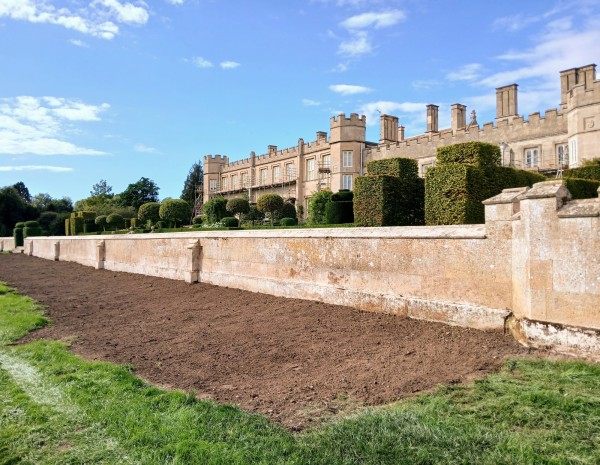
Finally, early autumn is the perfect time for sowing grass seed, with damp and warm soil being perfect for germination. With this in mind, we have recently completed a near year long project to transform an area to the front of our South Wall.
Last autumn, a mass of overgrown shrubs and self-sown trees that grew along our South Wall met their makers. They were cut down, grubbed out, and disposed of. By doing this, we’ve opened up beautiful vistas of the lake and parkland from the house and gardens, along with fully revealing splendid views of the house, wall, and parterre, as visitors approach through the parkland and across the Stone Bridge. All we needed to do then, was repair the great scar left behind by our activities.
This summer, we spent our time killing pernicious weeds that grew on the exposed ground, such as ground elder, thistles, and nettles, which had established themselves within the impenetrable mess that once disguised the wall behind. Once we had a blank canvas to work with, the ground was rotavated, then levelled and cleared of stones and stray roots, before being sown with grass seed.
By time we open the gardens for visitors to our Snowdrop Sundays next February, we should have a verdant green sward right up to the wall.
On that optimistic note, until next month, Happy gardening.
Asters and a honeybee
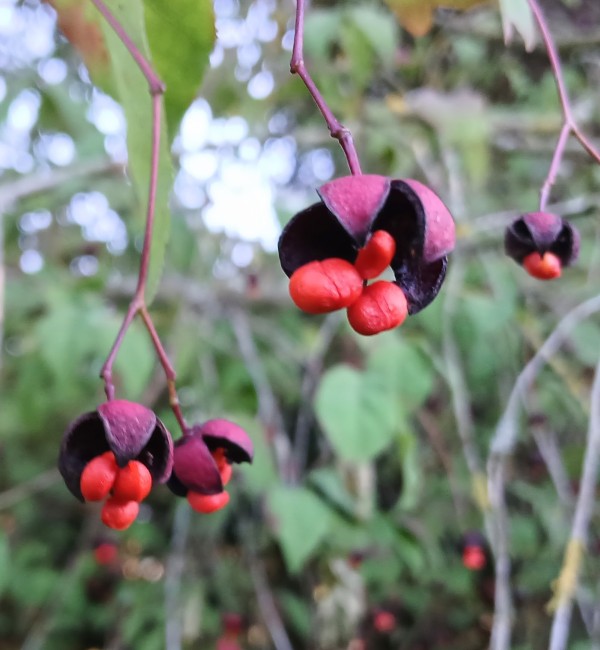
European spindle bus
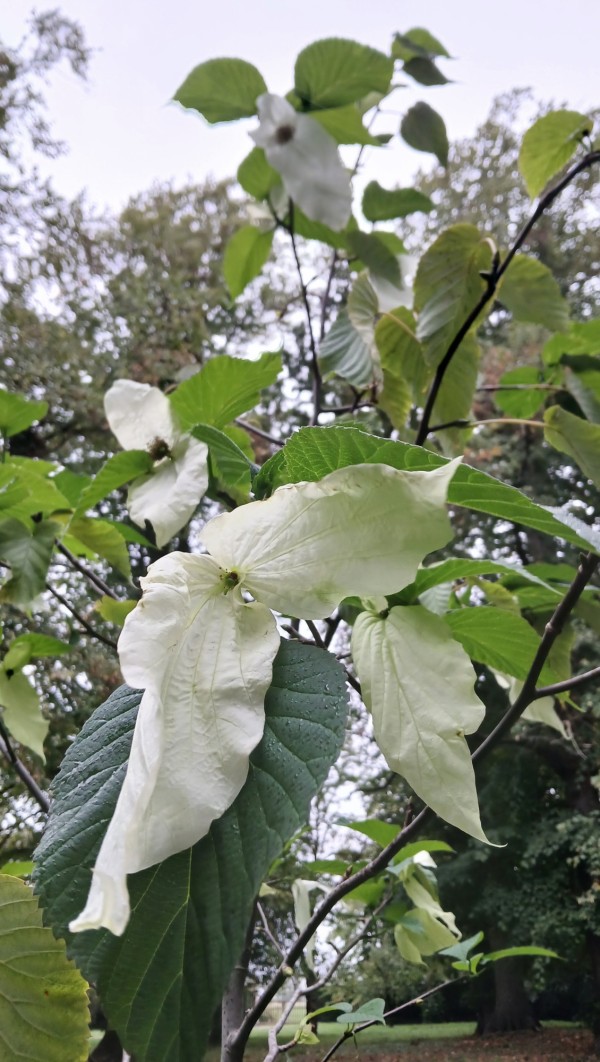
Handkerchief tree flowering just now
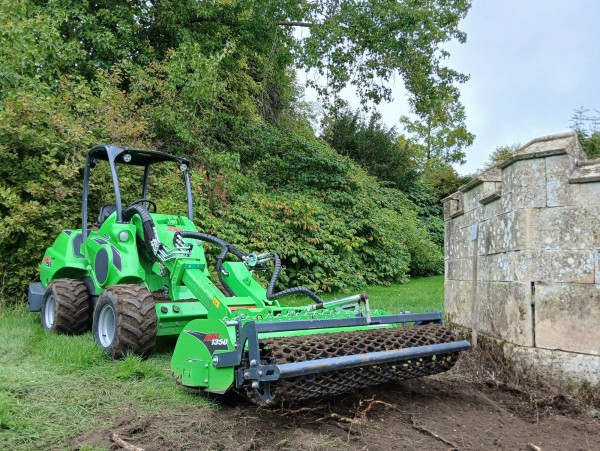
Industrial grade rotavator
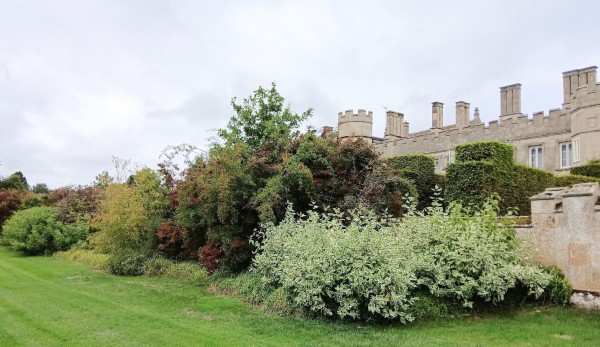
Before
After