
GARDEN BLOG - NOVEMBER 2026
To our ancient ancestors, their years were divided into two neat blocks: light and dark, Beltane and Samhain. Samhain, which arrived in November, marked the beginning of a new cycle of life. At this time, farmers would lead their cattle and sheep down from the summer pastures to be sheltered in stables. Of course, they couldn’t shelter all of their animals, so some were slaughtered for their meat, which was then salted, smoked, or otherwise preserved, to see folks through the rigours of winter. As a result, in Anglo-Saxon times, November became known as ‘Blōtmōnaþ’, meaning blood month. Elsewhere on the farm, the harvest must have been gathered in by Samhain, otherwise the naughty faeries would blight every plant with their breath, which is not nice of them.
Luckily for us modern day gardeners, our cannas and dahlias are already tucked up in our polytunnel for winter protection, safe from the attention of spiteful sprites.
Cocking a snook at such things is our ‘green rose’ which is still blooming away like billy-o, even though we’re now knocking on the door of winter. That said, if a passing faerie were to encounter this most unusual rose, and have a go at blighting its blooms, it’d be sorely disappointed, as what appear to be flowers are not actually flowers at all. The small, two-inch diameter blooms of Rosa chinensis ‘Viridiflora’ as it is known to botanically minded folks, actually comprises layers of bright green sepals rather than petals. Sepals are leaf-like structures that usually enclose and protect flower petals when in bud. With Rosa chinensis ‘Viridiflora’, as its buds burst, narrow, serrated sepals emerge, to take on the role of flowers. This performance is nothing more than an elaborate charade, as these mock flowers are completely sterile and unable to produce seed. When first exhibited in Europe at the Paris Exposition Universelle of 1856, the Gardeners’ Chronicle and Agricultural Gazette proclaimed that “a green-eyed monster like this is not inviting”. But what did they know? That same year it was introduced into British gardens by Bembridge & Harrison, and is still commercially available to this day!
Although the ‘green rose’ is still going strong, our herbaceous plants have passed their glory days of summer and are now rapidly deteriorating, dying down, and need cutting back and clearing away. By carrying out the task now, not only do our borders look tidy, but it also allows light to plants such as primroses to stimulate flowering in spring and ensures that we are not trampling emerging spring bulbs by leaving the job too late. The plant material removed is added to the compost heap, and when well-rotted, returned as a top dressing. It is important, however, to ensure that any weeds with seed heads, or pernicious weeds such as bindweed or ground elder are kept aside and destroyed.
On the subject of keeping our gardens tidy, it’s important to remove regularly the fallen leaves from lawns, as they will otherwise suffocate and kill the grass beneath, leading to a patchy lawn. Leaves left to lie on the ground also harbour pests and diseases that will cause unnecessary damage. Gathered leaves can quite simply be piled up in the same manner as a compost heap, covered with old carpet or tarpaulin and allowed to break down naturally. This time next year you will have lovely crumbly leaf mould to add to your borders.
Of course, not everything in the garden is dying back. Grass seed sown just a few weeks ago along the South Wall has not only germinated, but is growing strongly, and has even had its first cut. In February, when we throw open our gates to visitors for Snowdrop Sundays, they will, for the first time, get to see the magnificent South Wall in its full glory, freed from the tyranny of an overgrown and unsightly shrubbery that had previously been suffocating it.
Meanwhile, in our glasshouse, the multitude of pelargonium and tender perennial cuttings taken at the end of September have rooted nicely, and are now in the process of being potted up. Next year, they will do a sterling job of decorating rooms in the ‘big house’, along with filling pots and urns in the gardens.
On that forward looking note,
Until next month, Happy gardening.
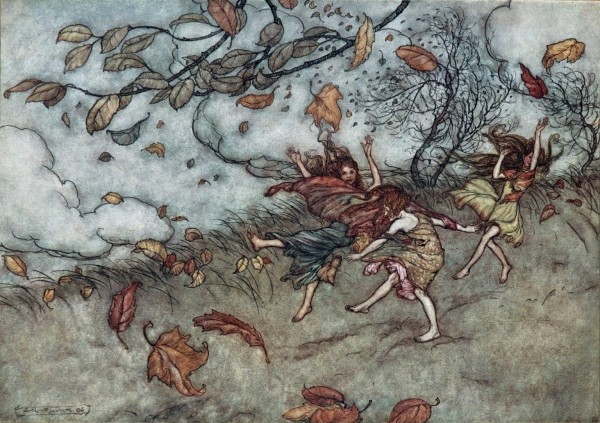
Samhain fairies by Arthur Rackham
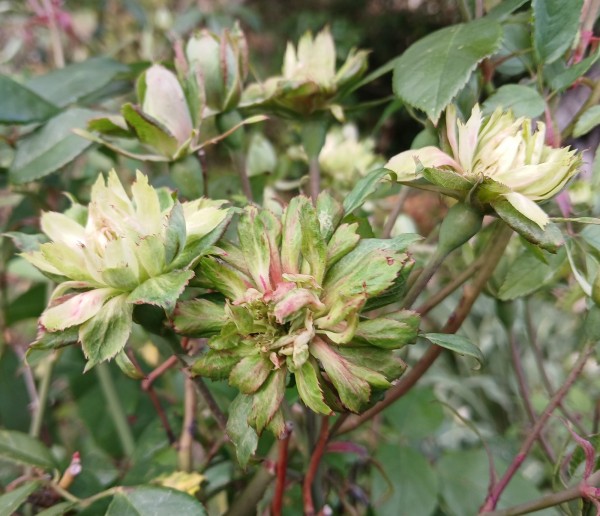
Rosa chinensis Viridiflora
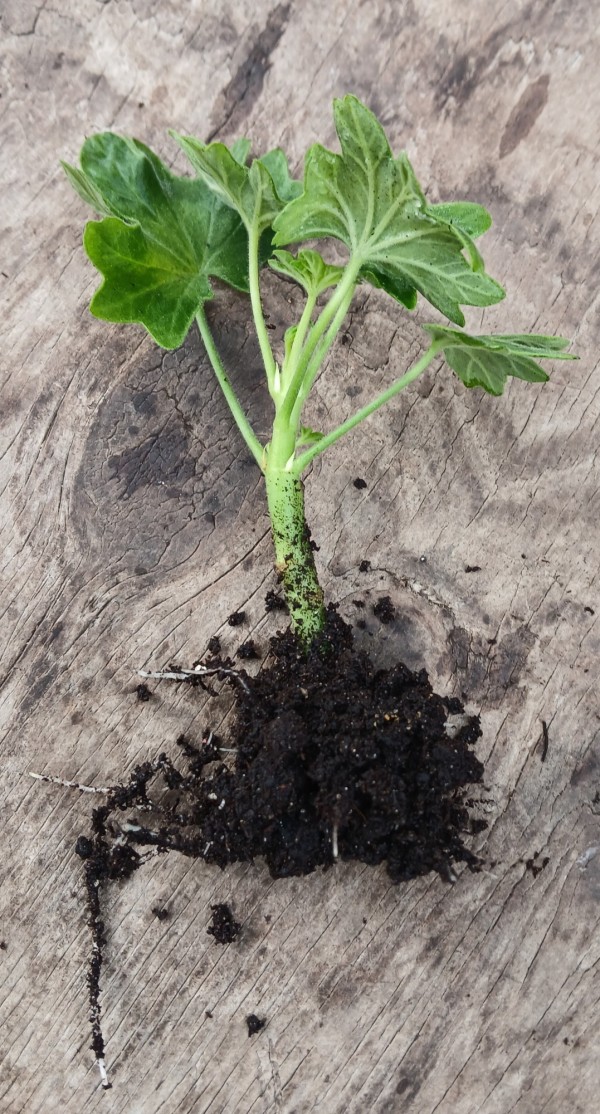
Rooted pelargonium cutting.

Before

After