GARDEN BLOG - MARCH
“Infamy, infamy, they’ve all got it in for me!”
Surely the most affecting (or should that be affected) take on the final moments in the life of well-known Roman Emperor, Julius Caesar, must be that delivered by popular national treasure of yesteryear, Kenneth Williams, in the 1964 classic historical comedy, Carry-on Cleo.
Assassinated on the Ides of March (15th), in the year 44 BCE, Julius Caesar was stabbed twenty-three times by a group of senators during a session at the Curia of Pompey. If he’d listened to the soothsayer that had previously warned him of impending peril, he might have stayed in to wash his toga instead of going out and meeting his maker on that day.
This is all very interesting, you say, but what does any of it have to do with gardening.
Well, in previous garden blogs, over the years, the subject of planting bare-root trees and shrubs has been brought up numerous times, with the advice always being to get it done before this time of year. Were you to ignore that sage advice, and plant them on the Ides of March, then they’d soon be as deceased as Julius Caesar. However, for us gardeners, the Ides of March doesn’t really need to spell impending doom where planting trees and shrubs is concerned, just a change in tactics. Pot grown trees and shrubs can be planted at any time of year, and that’s exactly what we’ve been doing here at Deene Park of late. Here’s what to do.
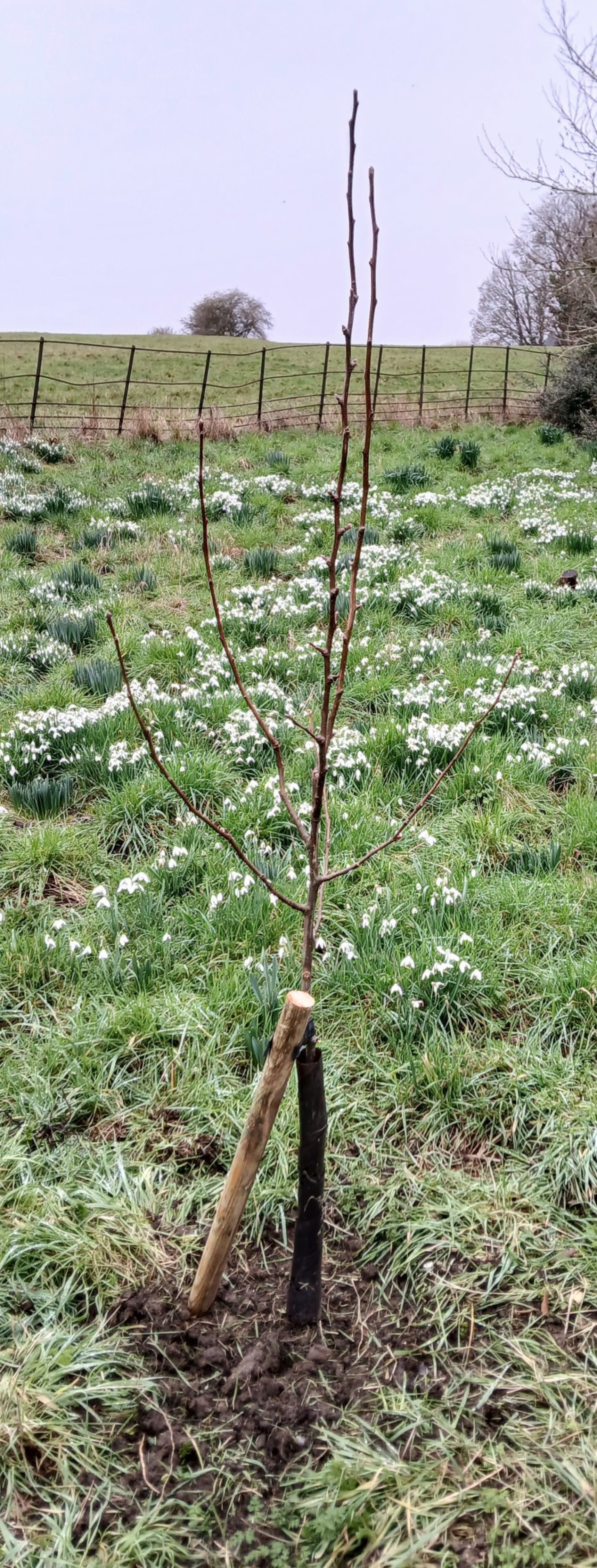
Step 1: Prepare the planting site.
Remove all weeds and grass, then dig a hole the same depth as the pot and approximately twice as wide, ensuring that the bottom of the hole is loosened.
Step 2: Place the tree in the hole and backfill.
Remove the pot and place your tree in its hole. Ensure the tree is upright and the top of its compost is flush with the surrounding soil. If your soil is good quality, just fill the hole with what was dug out. If not, improve it by mixing in an equal proportion of potting compost.
Step 3: Install a stake, if needed.
If your tree has a single stem, staking provides essential support during those early years of growth. Place the stake at a 45 degree angle, so that it doesn’t penetrate the root system. Using a suitably large hammer, knock it in until firm. Ensure the top of the stake is adjacent to your tree.
Step 4: Attach the tree to the stake with a tie.
Tie the tree trunk to the stake using a tree tie, firm enough to support it but not so tight as to restrict the tree’s growth, with a spacer between them to prevent them rubbing together and damaging your tree. It’s also a good idea to protect your tree with a plastic guard wrapped around the base of its trunk, as to foil the local wildlife that might want to chew on its bark.
Step 5: Water the tree
Water directly at the base of a tree. A tree planted in dry or warm weather will need a generous soaking, whereas in winter, or if the soil is moist, less water will be needed.
Step 6: After planting
This is the most important bit. Keep an eye on your tree, and water it throughout its first summer if required. Ensure that the planting area is free of competing weeds and grass for the first few growing seasons. Finally, keep the stake in place for a couple of years, after which time it can be removed, provided the tree has established well.
The process for shrubs is exactly the same but without a stake, and using a wire guard instead of a plastic one, as seen in the attached pictures.
Elsewhere in the gardens, we’re busy seed sowing, turning our compost heap, and taking a little time to marvel at the beauty of spring that is now unfolding before our eyes. Days are noticeably longer, birds flit about with added exuberance, and bumble bees emerge from their winter slumber to feast on the multitude of floral beauties bursting into bloom right now.
One of the more unusual flowering plants that we have is a wonderful cabbage-like creation called Giant Butterbur, or Petasites Japonicus to the botanically minded among us. This herbaceous perennial is native to China, Japan, Korea and the Russian island of Sakhalin.
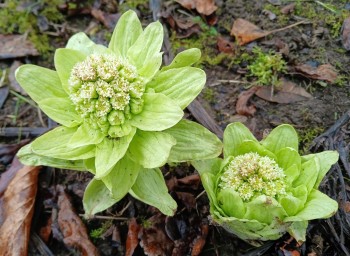
Giant butterbur
In Japanese cuisine, the shoots of giant butterbur are prepared to produce fuki miso, which is a kind of relish. However, it’s probably best to not overdo the fuki miso, as giant butterbur contains alkaloids that have been associated with cumulative damage to the liver and the formation of tumours.
Having ending this blog in the fashion it was started, that being a cautionary note:
Until next month, happy gardening.
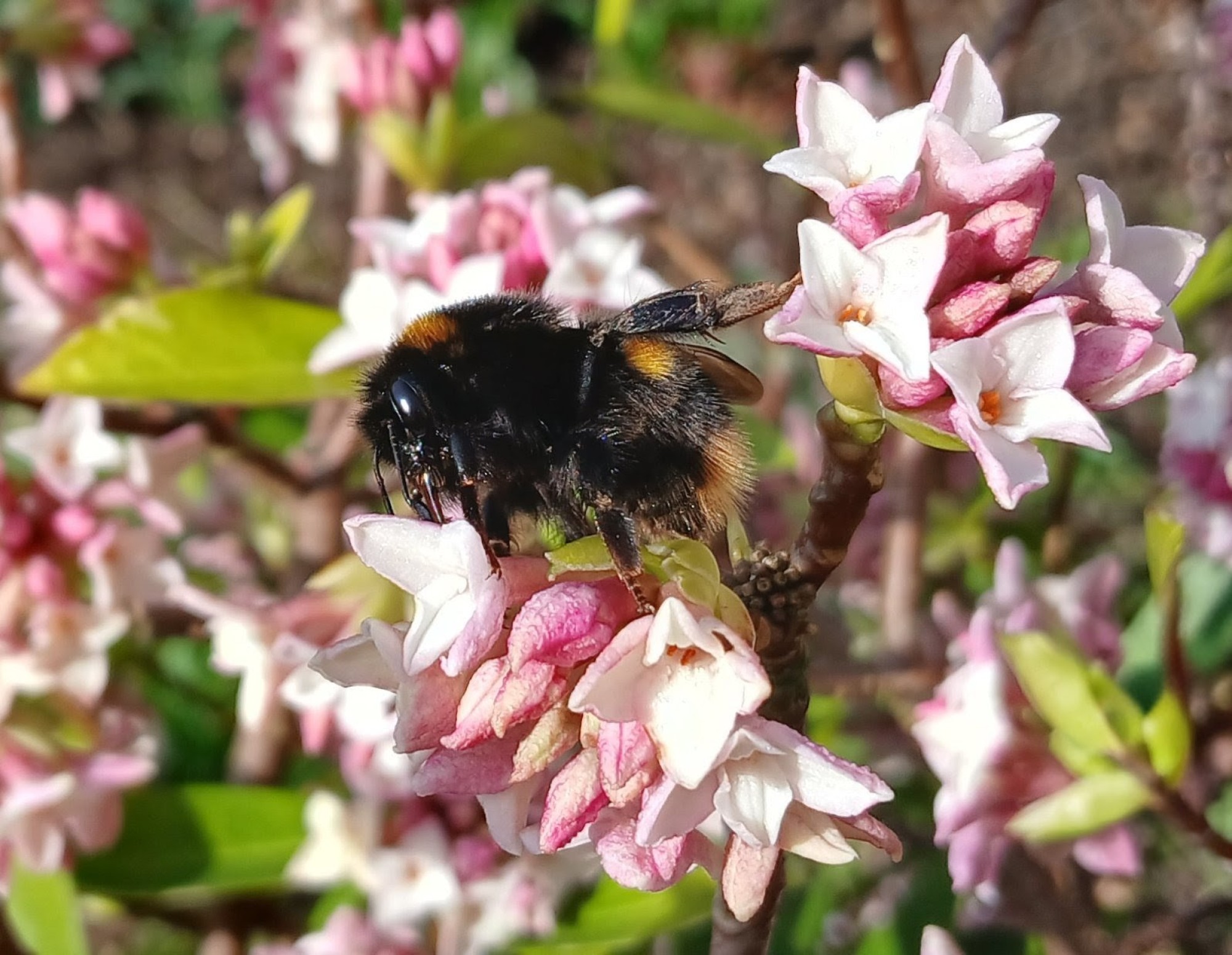
A bumble bee on Daphne

Kenneth Williams as Julius Caesar
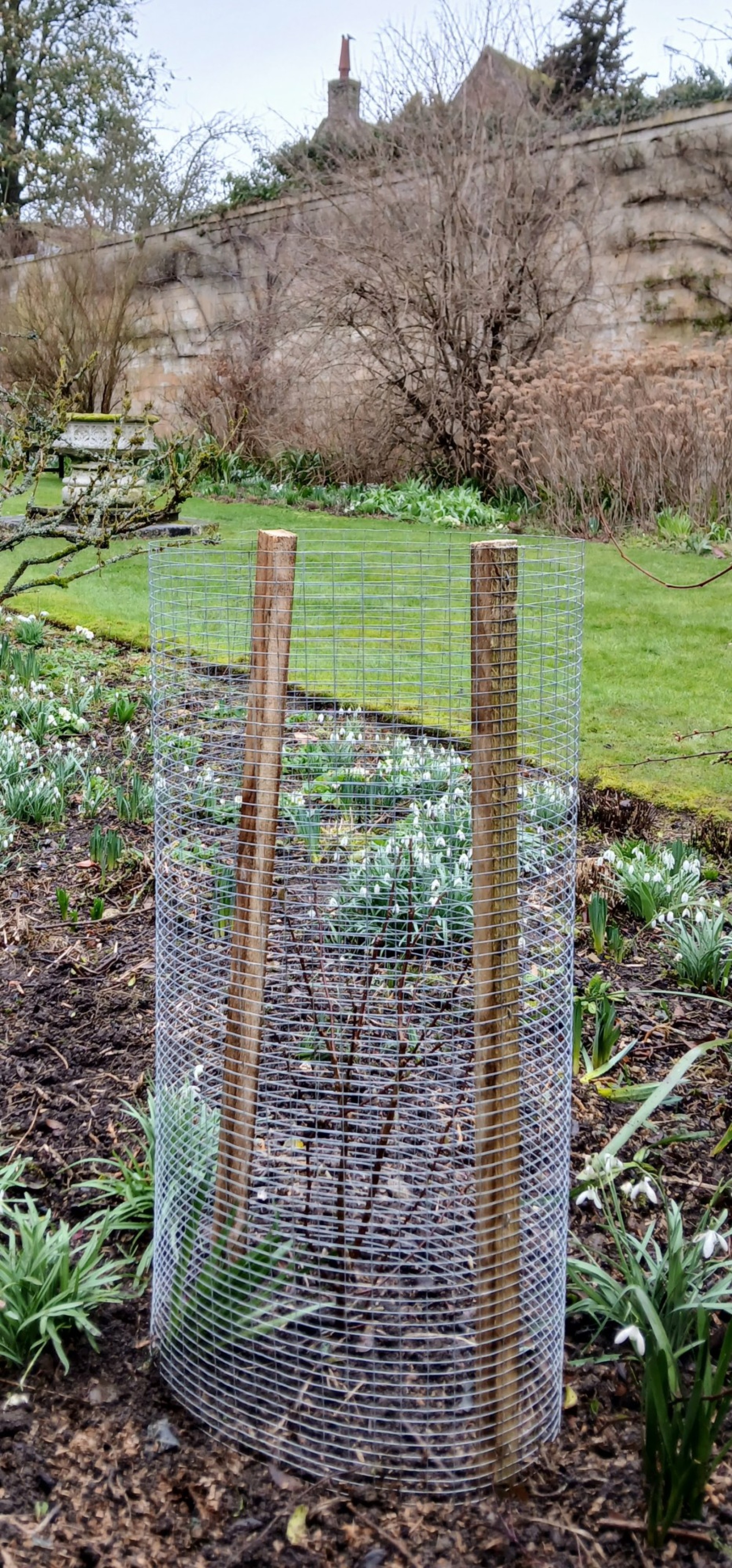
Newly planted magnolia shrub