
GARDEN BLOG - JUNE 2026
In distant times of yore, a piercing scream heard from the garden, so shrill as to be death inducing to anyone that heard it, could only have been caused by the uprooting of mandrake.
Mandrake is a hardy herbaceous perennial, native to the Mediterranean basin. The strange, humanoid appearance of their roots, have resulted in them having a long cultural history.
When unearthed, besides emitting their deadly shriek, mandrakes were also said to be highly poisonous to touch, Fear of the fatal consequences of uprooting mandrake, inspired inventive methods for harvesting them. Apparently, the best tried and tested method, with ears safely covered, involved loosening the earth around their root, attaching them by rope to a dog, which when coaxed by food would drag the mandrake up. Once out of the ground, the mandrake was rendered safe.
The roots, leaves, flowers, and fruits of the mandrake, all contain hallucinogenic alkaloids, which cause blurred vision, a racing heartbeat, vomiting, dryness in the mouth, and a host of other unpleasant symptoms. Poisoning can cause unconsciousness, paralysis, delirium, and hallucinations. That said, around 400BCE, Hippocrates noted that mandrake, when taken as “a small dose in wine, less than would occasion delirium, will relieve the deepest depression and anxiety”. This is nice to know.
Nowadays, a piercing scream heard from the garden at this time of year, is most likely caused by the gardener contemplating the arrival of yet another heatwave, and its consequences.
With heatwaves seemingly ever more common these days, us gardeners must take action to mitigate as best we can their effects on our treasured gardens, for both the garden’s sake and that of our sanity.
Here at Deene Park, our borders go without irrigation, and therefore have to fend for themselves, however harsh the weather may be. New additions are watered to settle them in then, then have to fend for themselves. To help our borders cope with such a disadvantage, we allow herbaceous plants to self-seed rather than deadhead them. As plants that are self-sown have chosen to live where they do, they may well suffer in periods of hot weather, but are much less likely to die as a result. Those that thrive here under such a regime, are the likes of salvias, hollyhocks, perfoliate alexanders, and verbena. Self-sowing also has the advantage of giving our borders a very relaxed feel, as those plants establish themselves in a rather painterly manner among the other herbaceous perennials and shrubs. Another advantage of this policy, is having the attractive dried skeletal remains of alliums and honesty adding interest to the borders right into winter.
Though the borders may at times get by stressed by hot weather, plants in our pots and urns positively thrive on it, as they are well fed and watered throughout summer. Such likes as Ethiopian Black Banana, brugmansias, and cannas, to mention just a few, add a real touch of exoticism to the garden. With all risk of frost behind us, our pots and urns are all now planted up with their summer garb, and ready to thrill.
A particularly fine plant used in our pots and urns summer display is Heliotropium arborescens 'White Queen', known more commonly as cherry pie plant, due to its very distinctive scent.
The first European explorer to have the pleasure of stumbling upon this delightful plant, or at least its original deep blue species, was a French botanist by the name of Joseph de Juissieu, while out and about in the Peruvian Andes. Having sent seed back to France, it was first cultivated as an ornamental plant at the Royal Garden at Paris, in 1740. Since then, numerous different cultivars have been bred, in all shades of blue and white, which still retain their most delicious scent.
On that fragrant note, until next month, happy gardening.
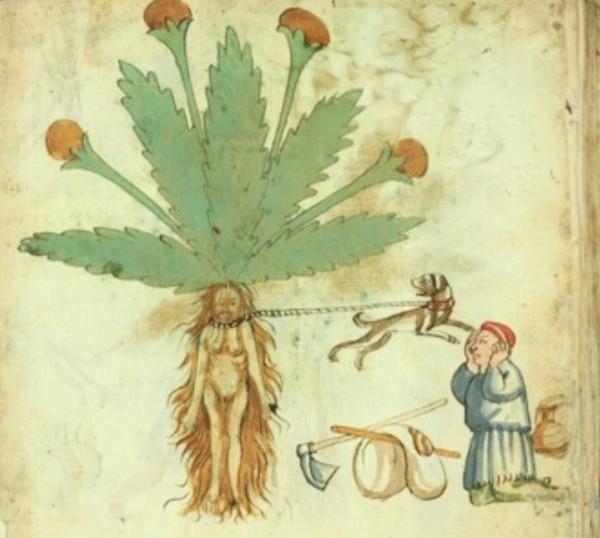
Mandrake being pulled up by a dog
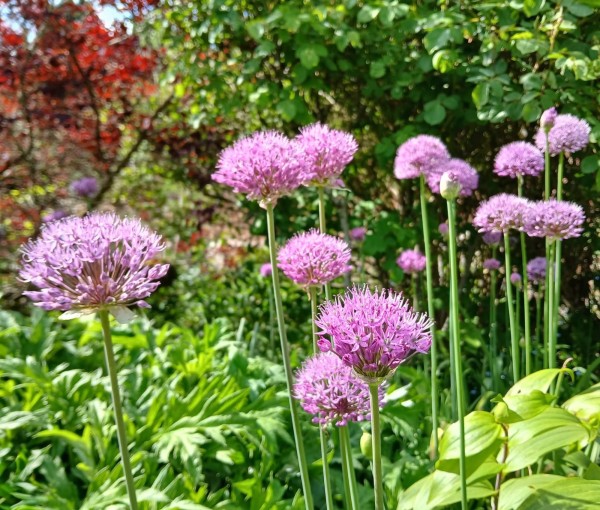
Self sown alliums
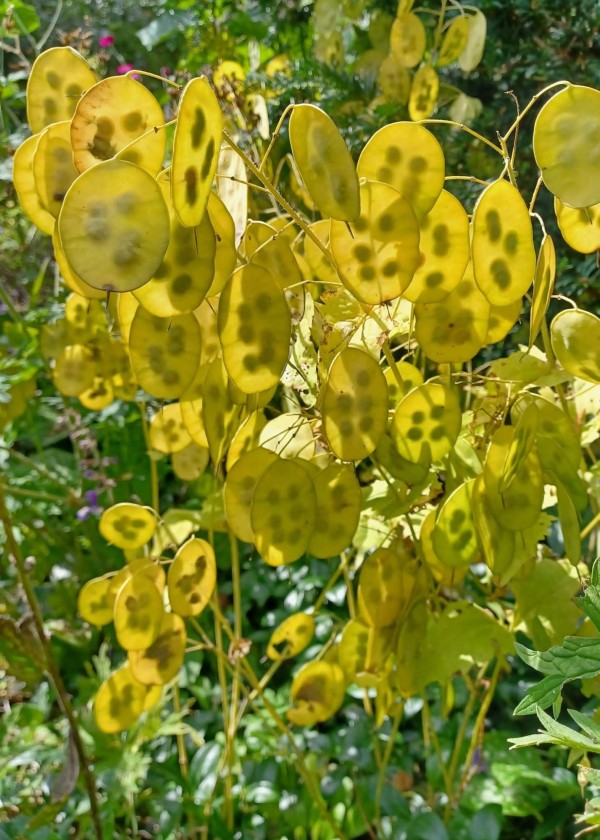
Self sown honesty
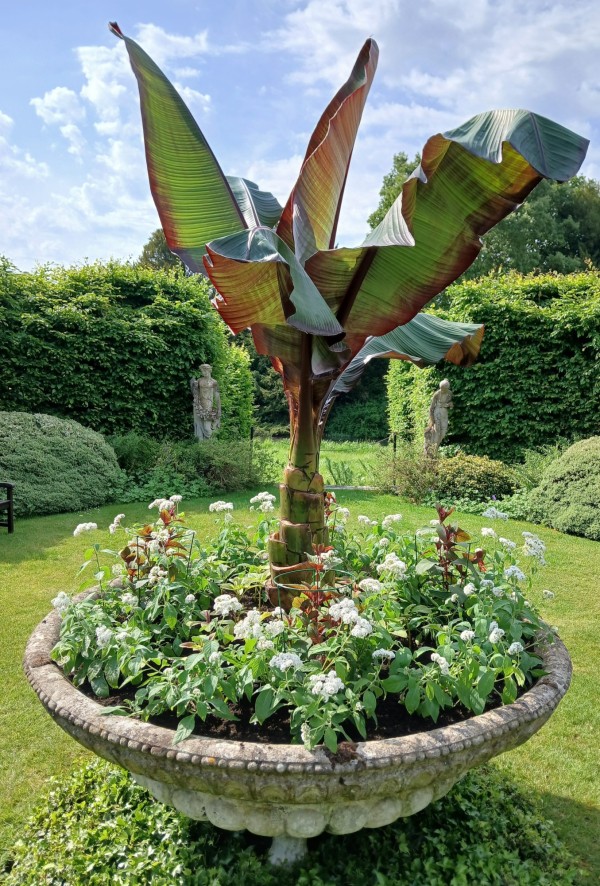
Newly planted Ethiopian black banana and heliotrope White Queen