
GARDEN BLOG - DECEMBER 2025
As the popular seasonal nursery rhyme of yesteryear would have it; “Christmas is coming, and the goose is getting fat”. Here at Deene Park, it’s not the geese alone that are rather large and rotund, our Gardeners Christmas Balls are too.
Hanging our Gardeners Christmas Balls is a tradition that stretches back for many decades, but spiritually minded folks of Northern Europe, adorned their homes in the bleakest days of winter with evergreens, berries, and mistletoe, since Pagan times. While evergreen foliage represents everlasting life, brightly coloured berries and sprigs of mistletoe symbolise fertility.
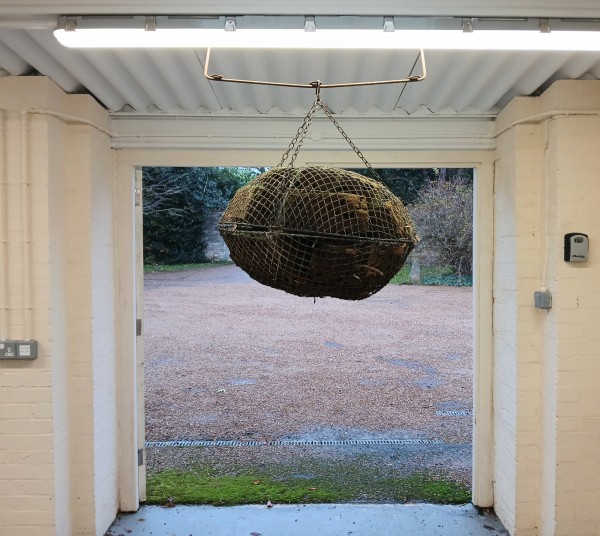
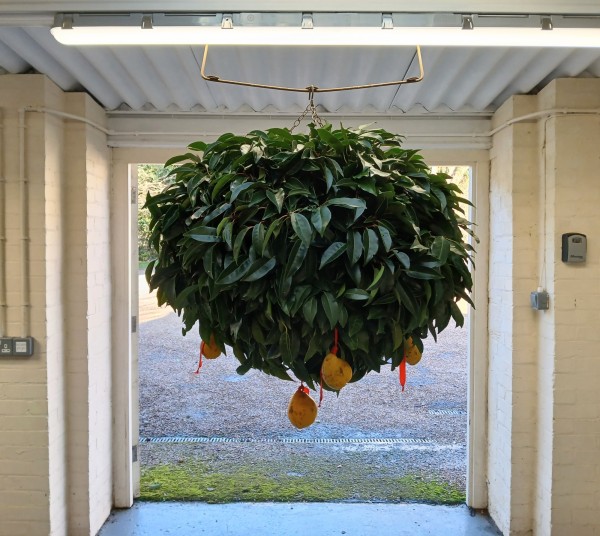
The process of making our festive balls is simple enough, but it takes us two whole days to gather the necessary materials and assemble them. Firstly, two mesh hanging baskets are filled with florist’s foam and attached to each other, forming a globe. We leave the foam dry, ensuring that the final creations are not too heavy to lift into place. Heading out into the gardens, we collect a selection of evergreen foliage, berries, and coloured stems. Returning to the embryonic balls, we firstly add fruit such as quince, suspended from the base of the wire frame. Next, we insert coloured stems, giving an outward burst of colour. Evergreen foliage, such as bay, yew, or laurel, is used to densely cover the wire frame so that it cannot be seen. Bright coloured berries of holly, rose, or stinking iris, are added for their cheeriness. Finally, we add a cluster of dried Hydrangea ‘Annabelle’ flower heads for contrast. Hoisting the Christmas balls into place is no mean feat, as they are quite weighty, and at over six foot across, quite bulky. However, with teamwork, we accomplish our goal. Once in place, the final garnish is added in the form of a hanging sprig of mistletoe, of course.
2025 has been what’s known as a ‘mast year’, meaning that we’ve had an exceptionally good crop of fruits and berries of all kinds, resulting in this year’s Gardeners Christmas Balls being particularly fulsome.
 |
 |
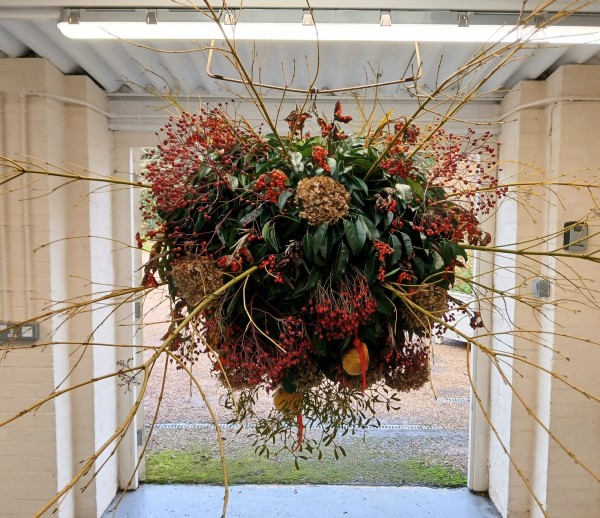 |
| How it starts | Quince and greenery added | Ready to go |
Meanwhile, out in the gardens, winter is a great time of year for tackling tasks that would be rather disruptive if carried out while we’re open to the visiting public.
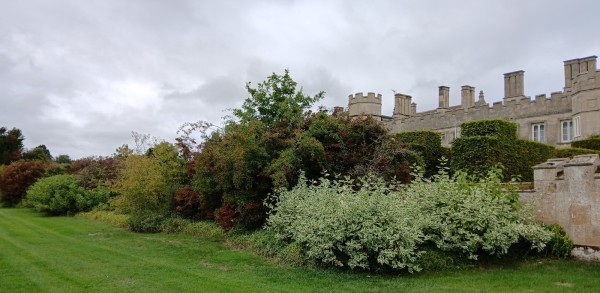
One such task, carried out recently, has been removing the vegetation growing along the South Wall, below our Parterre. Originally planted in the 1960’s, the shrubs there had become seriously overgrown, while several had died and left gaps in the planting. Also, a number of self-sown trees had established themselves, and were liable to cause structural damage to the wall if left unchecked. The whole lot had to go, so that we could restore the area being an attractive feature once more.
So far, the shrubs and trees have been felled and chipped. Before Christmas, we shall have the stumps and periwinkle ground cover rooted out, and the earth levelled. During the spring and summer of next year, we will set about controlling any weed issues that might occur on the exposed earth, before cultivating and grass-seeding in the autumn. Although the process might appear quite protracted, it’s necessary to take our time, do the job properly, and ensure the very best results.
 |
 |
| South Wall before clearance | South wall after clearance |
As our gardens are ever evolving places, every now and again, as described above, we need to grapple them into submission. Mostly of course we take a much gentler approach, as with rose pruning - our main winter task.
An air of mystery surrounds the process in the minds of many, but it’s a straightforward enough task really.
First up, and easiest to deal with, are ramblers that grow freely through trees. These require no attention whatsoever, simply leave them to ramble.
Specie roses are another group requiring only minimal attention, in the form of removing dead and diseased material.
Climbing roses, trained along wires attached to walls, do need attention to keep in check. Left unpruned they will soon become a tangled mess with reduced flowering. For best results, dead, diseased, and weak material, is removed completely. Smaller branches are pruned back to three or four buds from their base, just above an outward facing bud. Long, strong, vigorous new stems, can be trained to form the permanent structure of the rose, and replace older stems that have become less productive.
Shrub roses, hybrid teas, and floribunda types, all follow the same basic principles, the aim of which is to create an open habit of growth. Always remove dead, diseased, weak, and crossing material, and prune healthy growth to an outward facing bud. Hybrid teas and floribundas then have vigorous stems reduced to between four and six buds in length, with weaker stems back to three or four. Shrub roses have a more lax habit, and are pruned less rigidly, with growth pruned back by roughly a third.
Pruning roses is a task that can be carried out at any time during dormancy, so there’s no great rush, you have between now and February to get the job done. This is jolly good news for us gardeners here at Deene Park, as we quite literally have many dozens of them to see to.
Until next year, Happy gardening.
As the popular seasonal nursery rhyme of yesteryear would have it; “Christmas is coming, and the goose is getting fat”. Here at Deene Park, it’s not the geese alone that are rather large and rotund, our Gardeners Christmas Balls are too.
Hanging our Gardeners Christmas Balls is a tradition that stretches back for many decades, but spiritually minded folks of Northern Europe, adorned their homes in the bleakest days of winter with evergreens, berries, and mistletoe, since Pagan times. While evergreen foliage represents everlasting life, brightly coloured berries and springs of mistletoe symbolise fertility.
The process of making our festive balls is simple enough, but it takes us two whole days to gather the necessary materials and assemble them. Firstly, two mesh hanging baskets are filled with florist’s foam and attached to each other, forming a globe. We leave the foam dry, ensuring that the final creations are not too heavy to lift into place. Heading out into the gardens, we collect a selection of evergreen foliage, berries, and coloured stems. Returning to the embryonic balls, we firstly add fruit such as quince, suspended from the base of the wire frame. Next, we insert coloured stems, giving an outward burst of colour. Evergreen foliage, such as bay, yew, or laurel, is used to densely cover the wire frame so that it cannot be seen. Bright coloured berries of holly, rose, or stinking iris, are added for their cheeriness. Finally, we add a cluster of dried Hydrangea ‘Annabelle’ flower heads for contrast. Hoisting the Christmas balls into place is no mean feat, as they are quite weighty, and at over six foot across, quite bulky. However, with teamwork, we accomplish our goal. Once in place, the final garnish is added in the form of a hanging sprig of mistletoe, of course.
2025 has been what’s known as a ‘mast year’, meaning that we’ve had an exceptionally good crop of fruits and berries of all kinds, resulting in this year’s Gardeners Christmas Balls being particularly fulsome.
Meanwhile, out in the gardens, winter is a great time of year for tackling tasks that would be rather disruptive if carried out while we’re open to the visiting public.
One such task, carried out recently, has been removing the vegetation growing along the South Wall, below our Parterre. Originally planted in the 1960’s, the shrubs there had become seriously overgrown, while several had died and left gaps in the planting. Also, a number of self-sown trees had established themselves, and were liable to cause structural damage to the wall if left unchecked. The whole lot had to go, so that we could restore the area being an attractive feature once more.
So far, the shrubs and trees have been felled and chipped. Before Christmas, we shall have the stumps and periwinkle ground cover rooted out, and the earth levelled. During the spring and summer of next year, we will set about controlling any weed issues that might occur on the exposed earth, before cultivating and grass-seeding in the autumn. Although the process might appear quite protracted, it’s necessary to take our time, do the job properly, and ensure the very best results.
As our gardens are ever evolving places, every now and again, as described above, we need to grapple them into submission. Mostly, of course, we take a much gentler touch, as with rose pruning, our main winter task.
An air of mystery surrounds the process in the minds of many, but it’s a straightforward enough task really.
First up, and easiest to deal with, are ramblers that grow freely through trees. These require no attention whatsoever, simply leave them to ramble.
Specie roses are another group requiring only minimal attention, in the form of removing dead and diseased material.
Climbing roses, trained along wires attached to walls, do need attention to keep in check. Left unpruned they will soon become a tangled mess with reduced flowering. For best results, dead, diseased, and weak material, is removed completely. Smaller branches are pruned back to three or four buds from their base, just above an outward facing bud. Long, strong, vigorous new stems, can be trained to form the permanent structure of the rose, and replace older stems that have become less productive.
Shrub roses, hybrid teas, and floribunda types, all follow the same basic principles, the aim of which is to create an open habit of growth. Always remove dead, diseased, weak, and crossing material, and prune healthy growth to an outward facing bud. Hybrid teas and floribundas then have vigorous stems reduced to between four and six buds in length, with weaker stems back to three or four. Shrub roses have a more lax habit, and are pruned less rigidly, with growth pruned back by roughly a third.
Pruning roses is a task that can be carried out at any time during dormancy, so there’s no great rush, you have between now and February to get the job done. This is jolly good news for us gardeners here at Deene Park, as we quite literally have many dozens of them to see to.
Until next year, Happy gardening.