
GARDEN BLOG - AUGUST
Mr. Arthur Askey, a particularly popular music hall artiste of yesteryear, famously warbled:
Oh, what a glorious thing to be,
A healthy, grown-up, busy busy bee,
Whiling away the passing hours,
Pinching all the pollen from the cauliflowers.
Back in 1938, when ‘big-hearted Arthur’ as he was known to his many fans, first performed his well-known ditty, our bumblebees were plainly in rude health. Nowadays, it seems, they are in need of a little help to ‘live their best lives’ as folks say.
The bumblebee Conservation trust has reported that, in recent years, bumblebee numbers have been in decline. With their fat, furry bodies, adapted to our traditionally cooler climate, they are struggling with increasingly regular periods of extreme heat and drought. Luckily, all of us gardeners, if we pull our fingers out, can do something to help our little buzzing buddies. Conservationists say that creating more flower-rich habitats for them to find food, and planting dense shrubbery in which they can hide from the heat and move between flowers through cooler patches of air, will help them not just survive, but thrive. Here at Deene Park, we endeavour to have a good selection of bee-friendly flowers in bloom at all times of year. Right now, lavenders, hollyhocks, globe thistles, and field scabious, are proving to be particularly popular with our bumblebees, along with a host of other pollinating insects. The plants featured all flower prolifically, and are very drought tolerant, so will provide plentiful food for our bumblebees regardless of weather conditions. Alongside the supply of dense shrubbery for shade, we’re giving our bumblebees a good fighting chance.
While on the subject of pollinators, they are beginning to reap extra benefits from our Waterside Meadow. Though only a couple of years old, our Waterside Meadow, which was formerly a great expanse of mowed lawn, has seen a couple of new wildflowers arrive this year. By what means our first specimens of wild angelica and wild carrot managed to get here is a mystery, but we’re happy to see them. In time, they will multiply, and provide plentiful succor for numerous pollinators. As time moves on, other wildflowers will undoubtedly follow suit, and make our Waterside Meadow their home.
While us gardeners (and bumblebees) may struggle in the relentless hot and dry weather of this summer, our reptile population are revelling in such conditions, particularly, it would seem, common lizards, which have been spotted a few times in the gardens of late. Known to botanically minded folks as Zootoca vivipara, common lizards live in various habitats, including heaths, moors, wood, and grassland. Though variable in colour, they are usually brownish-grey, often with rows of darker spots or stripes down their back and sides. Bellies of male common lizards are yellow or orange with spots, while females are plainer and pale. Common lizards are remarkable creatures. If under attack by a predator, they have the ability to shed their wagging tail to distract an attacker and make a speedy getaway. They then grow their tail back. Also, common lizards are unusual among reptiles, as they incubate their eggs internally, and give birth to live young, rather than laying eggs.
Now, after all that native loveliness, we ought to take a gander at some of the pure horticulture on display in the gardens right now. Particularly impressive, and going great guns at the moment outside our tea rooms, is a display of potted plants that hail from exotic climes, which are having a whale of a time this sweltering summer. Pots and urns, not only at out tea rooms but throughout the gardens, guarantee a great show of volume and colour, whatever the summer weather. Among the display are cannas and an Ethiopian black banana, which spend the winter protected from frost in our polytunnel and glasshouse respectively; argyranthemums, coleus, and salvias, produced each year by cuttings; and varieties of Love-lies-bleeding grown from seed sown in spring. Although they involve a great deal of effort to grow and maintain, our pots and urns are well worth it for their sheer exuberance.
On that energetic note, until next month, happy gardening.
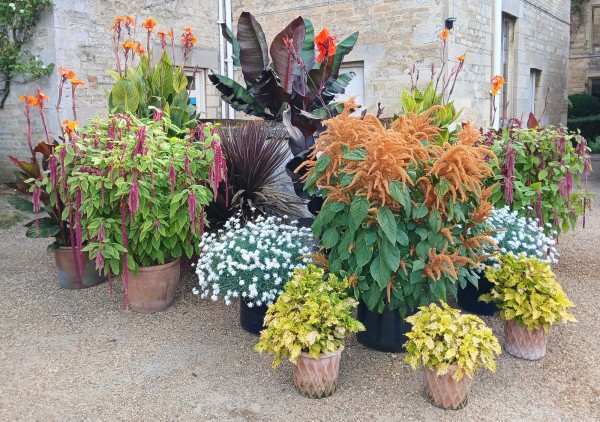
Tea room display
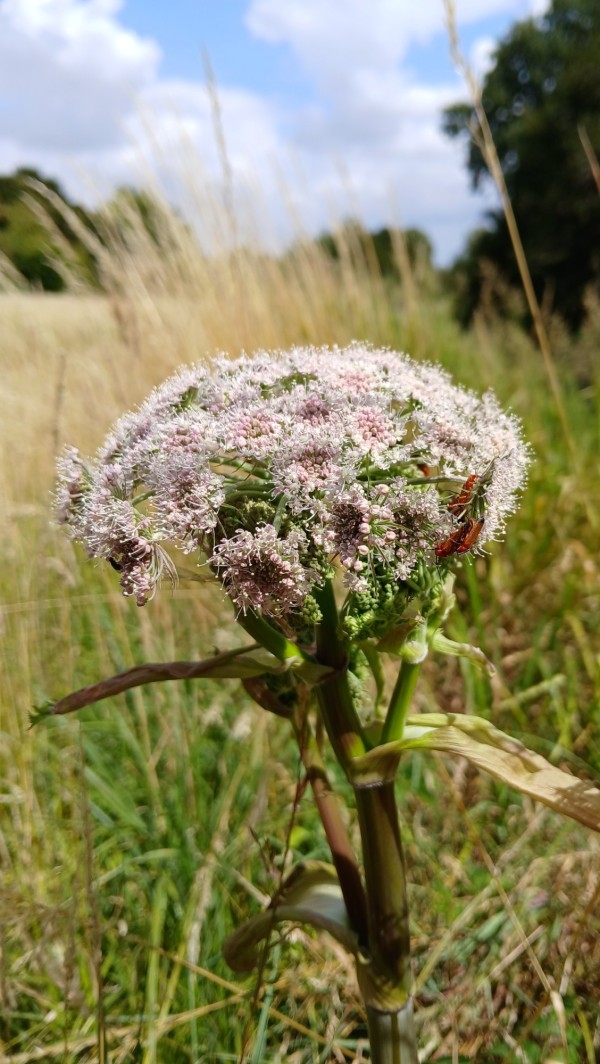
Wild angelica and red soldier beetles
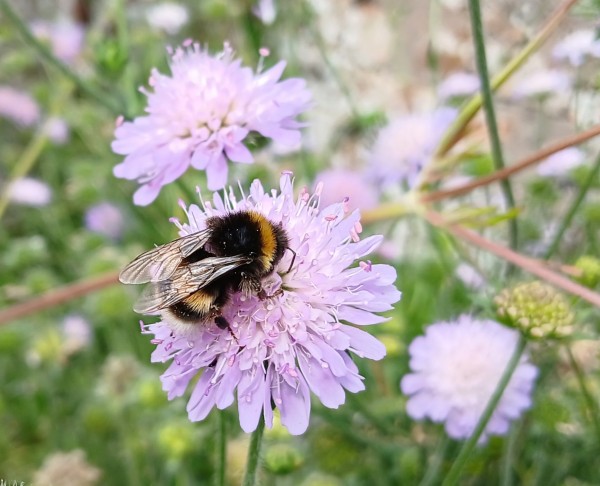
Bumblebee on field scabious
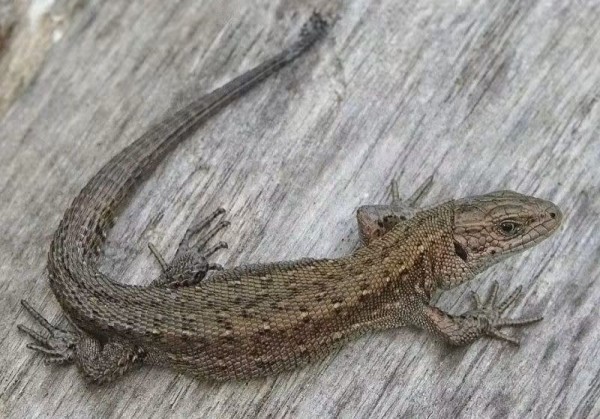
Common lizard