
GARDEN BLOG - APRIL 2026
In 2002, marking the Queen's Golden Jubilee, the international conservation charity The Plantlife County Flowers asked folks to vote for the wildflower that they felt best represented their county. Here in Northamptonshire, it was the cowslip that triumphed.
Though cowslips, known to botanically minded types as Primula verris, are less prevalent in the wild than they once were, they’re having a bit of a renaissance here at Deene Park, flourishing in our Wildflower Orchard. The orchard was established nearly a decade ago, and was planted with a host of wildflowers that are local to the area. The wildflowers that we planted initially, including cowslips, have steadily multiplied by setting seed, and are now going great guns, as they say.
The name cowslip comes from Old English, and means 'cow-slop' otherwise known as a cowpat, in reference to it having grown abundantly in cow pastures at that time.
In English folklore, cowslips were known as ‘keys of heaven’ and ‘St. Peter’s Herb', due to their drooping flower clusters resembling a bunch of keys. Legend has it that St. Peter was told that a duplicate key to Heaven had been made, allowing the undeserving to sneak quietly in, and this alarming news caused him to let his keys drop. At the place that they fell to Earth, cowslips sprang forth.
From a scientific perspective, ‘The Herball or General Historie of Plants’ of 1597, by John Gerard, tells us that “the flowers taketh away spots and wrinkles of the skin, sunburning, and freckles, and adds beauty exceedingly’’. A great boon no doubt to plain wenches that wished to attain great comeliness.
Meanwhile, in Ireland, farmers would smear cowslip juice on the udders of their cattle, thus protecting the milk from being stolen by supernatural means.
Back to the here and now, cowslips are important for wildlife, as their flowers offer an early source of nectar for various insects including bees, beetles and butterflies.
Besides cowslips, our gardens are bursting with fresh new life just now. Daffodils, tulips and hyacinths are among the most prominent flowering bulbs; while a host of herbaceous perennials, such as primulas, lungworts, and violets, carpet the ground beneath them. Trees and shrubs, including flowering currants, magnolias, and cherry blossom, complete the scene.
Talking of fresh new life: each year, from seed, we grow perennials to add diversity to the permanent planting, and annuals for plugging gaps in borders or for filling our summer displays in pots and urns. Growing plants from seed is a straightforward process that is very rewarding. It’s best to use a specific seed and cutting compost, as these have been developed to give the best results. Half fill a seed tray with compost, level it out and tamp down gently, then water. Watering before sowing ensures that your seeds are not washed away from where you sowed them. Seed should be sown evenly and sparingly to allow each new seedling its own space. Some seed will need covering with a fine layer of sieved compost, whereas others need to remain exposed, the seed packet will tell you what to do on that front. Cover your seed trays with a sheet of glass of transparent plastic to maintain humidity, and place in a bright and warm location. Within a matter of days your seed will begin to germinate. At this point remove the glass and ensure that the compost doesn’t dry out at all. When your seedlings have produced a second set of leaves, they are ready to be pricked out and potted up. Then, when they have established themselves, and the risk of frosts has passed, it’s time to plant them outdoors.
Another seasonal task that needs tackling just now, is shading our glasshouse, as stronger sunshine and longer days can make them prone to overheating at this time of year. Plants exposed to these conditions have a tendency to dry out quickly and may wilt and scorch as a result. It’s essential, therefore, that we provide the plants within our glasshouses with shade. We use a liquid shading concentrate that is simply mixed with water in a bucket, following manufacturer’s instructions, and applied to the exterior of the glasshouse with a mop. Our glasshouse shading is bought in bulk from a horticultural supplier, but the same product in smaller containers is available in most good garden centres. Alternative methods of glasshouse shading available include external shade netting whereby a large piece of plastic weave can simply be thrown over the roof and clipped to the outside or use the same type of shade netting clipped instead to the interior. Nicely shaded, our glasshouse plants will continue to thrive unstressed throughout the summer.
Elsewhere, us gardeners are getting fully into our stride with the kind of upkeep, such as mowing, edging lawns, and deadheading, that keep our gardens looking smart and trim.
Until next month, happy gardening.
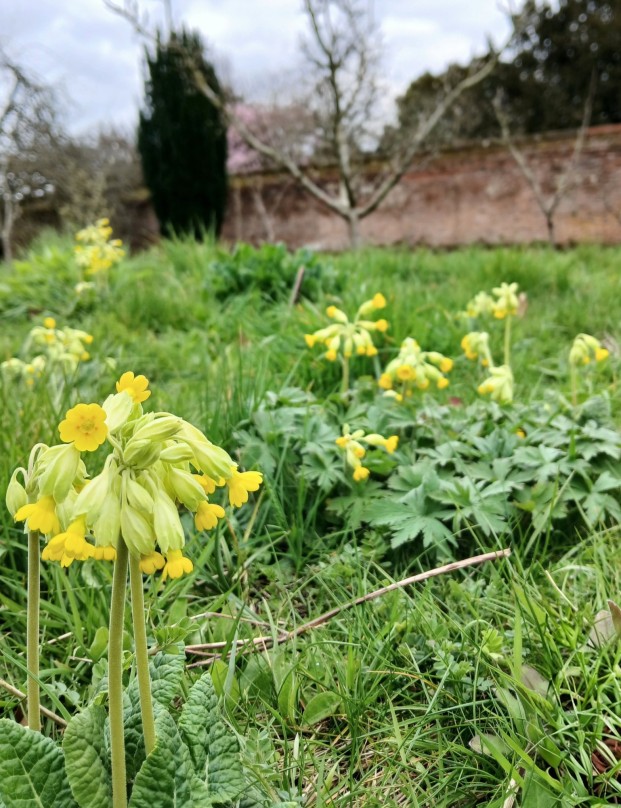
Cowslips in the Wildflower Orchard
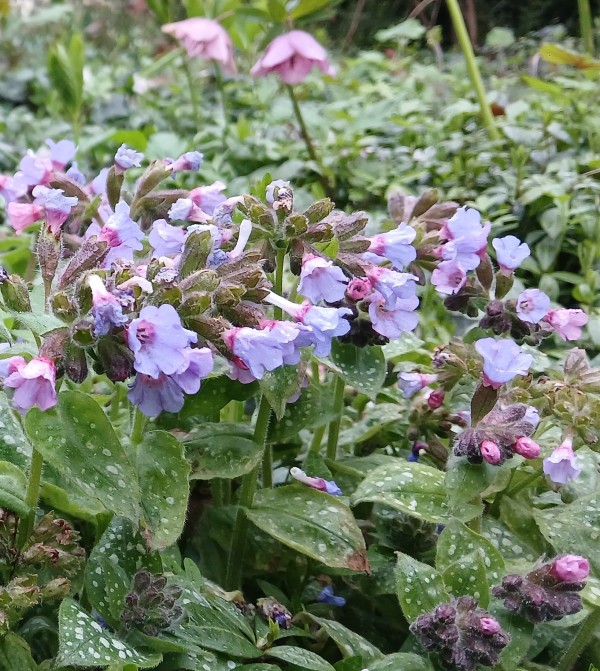
Lungwort
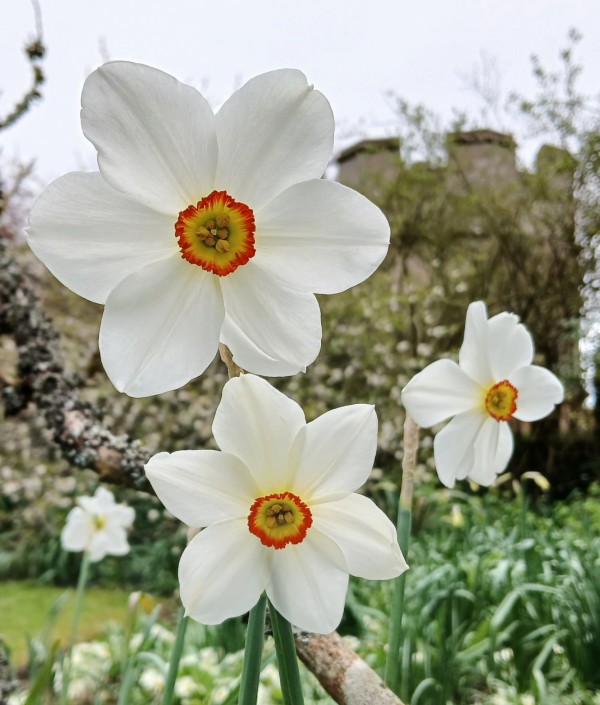
Narcissus Actaea
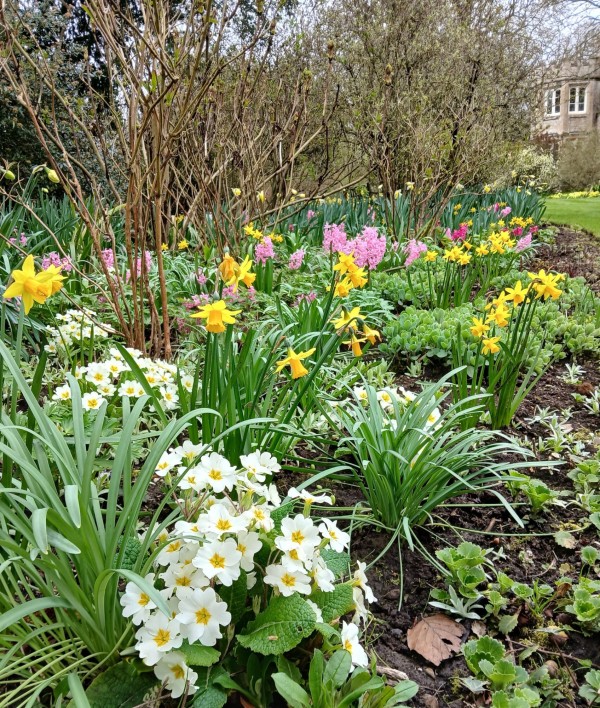
Spring flowers in the Long Borders
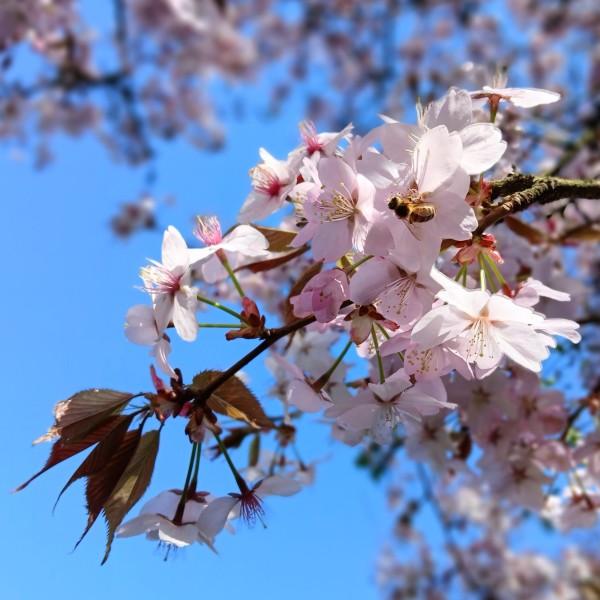
Cherry blossom and a honey bee